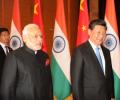
While the two sides' objectives may appear to differ, it is clear that both India and China are emphasising on the common minimum possible areas of cooperation between them, says Srikanth Kondapalli.

'While visits and personal meetings are useful, changes of strategic significance have occurred recently, with Beijing trying to take the lead which Modi must take note of.'

'Assuming the official defence allocations represent the true picture, the $142 billion figure still represents a phenomenal increase and surpasses that of Japan ($42 billion), India ($40 billion), South Korea ($33 billion) and several other Asian countries put together and shows that China is flexing its military muscle.'
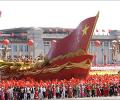
Premier Li Keqiang highlighted his government's performance in the last one year and the challenges ahead in various fields. Compared to other reports by his predecessors, Li spoke more frankly about the mounting challenges faced by the country. Srikanth Kondapalli on the two recent Chinese parliament sessions.
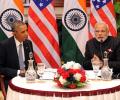
India has moved beyond the traditional trappings of non-alignment

For a rising country like China with its sights set on global and regional power, any coming together of the US and India is the worst case scenario. Hence, China is concerned with the emerging equations between New Delhi and Washington, says Srikanth Kondapalli.
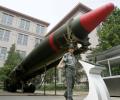
Despite four disarmament section talks and six strategic dialogues between the two foreign ministries, China's intransigence on recognising Indian nuclear status resulted in no confidence building measures in the nuclear field between the two, says Srikanth Kondapalli.

Chinese President Xi Jinping has suggested five thrust areas to improve relations with India. It is likely all these issues, in addition to the points raised by Xi at Fortaleza, will be part of the joint declaration at the end of his visit to India, says Srikanth Kondapalli.
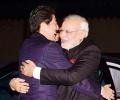
'The regional context and the personal ties between Modi and Japanese Prime Minister Shinzo Abe to a large extent contributed to this dawn of a new era in bilateral relations,' says Srikanth Kondapalli.

All the three issues raised by China at the Modi-Xi meeting are either intractable or peripheral to the bilateral relations and suggest conventional methods to placate the other side without yielding much, says Srikanth Kondapalli.

The new government needs to clearly insist on diplomatic reciprocal arrangements with China. While reciprocity is a function of power in bilateral relations, the Modi-led government's responses should be based on India'S inherent strengths, says China expert Srikanth Kondapalli.

As India rises, creating niche areas for itself in the Asian landscape, China and India are bound to step on each other's vital areas of importance, says Srikanth Kondapalli.

Domestically, China's 'strike hard' policy is alienating Uighurs further in Xinjiang. China's quid pro quo with the Taliban is hardly any lasting solution to the Afghanistan crises or to regional security, says Srikanth Kondapalli.
China wants a code of conduct for troops on the India-China border areas. While the Indian side has reacted cautiously, it is not clear what effective additional protocols that the current proposed code will bring forth to usher stability in the border areas, says Srikanth Kondapalli.

Both India and South Korea will use President Park Geun-hye's visit to unveil a comprehensive programme for mutual benefit and impacting on regional security environment, says Srikanth Kondapalli.

Dr Manmohan Singh would be faced with very few choices in Beijing given the Chinese conceived notions of the world today and India's low place in their calculus, says Srikanth Kondapalli.

Despite vast differences in the way the media operates in the two countries, an India-China media forum will go a long way in improving understanding between the two countries, says Srikanth Kondapalli.

When it came to national security issues, China never hesitated to take a quick decision regardless of the material costs. Nor were the superiority in military strength of the adversary a consideration, Srikanth Kondapalli points out.

A close scrutiny of speeches and documents during Chinese premier Li Keqiang visit indicate that, while there are gains for both Beijing and New Delhi, overall China's diplomacy scored more points, says Srikanth Kondapalli.

It is clear that overall the Chinese transgression will leave its scars for a long time to come on the bilateral equations, even as India will have to learn from lessons in statecraft to protect its sovereignty and territorial integrity, says Srikanth Kondapalli
